
50 Meaningful Gifts NGOs Can Give to Nigerian Schools (That Actually Make a Difference)
If you’re searching for “things NGOs can give to schools” or wondering “what is the best donation I can give to a public school?”—especially in Nigeria—you’re asking the right questions. And honestly? The fact that you’re here means you already care about making a real impact.
Let me be straight with you: the “best” donation isn’t always the flashiest one. It’s the one that removes a barrier—whether that’s a child walking barefoot to school, a student too hungry to concentrate, or a girl missing class because she can’t afford sanitary pads.
With around 20 million Nigerian children currently out of school and education funding falling short of UNESCO’s recommendations, the work you’re doing isn’t just helpful—it’s essential. You’re often the lifeline keeping schools functional and students enrolled.
This guide breaks down 50 practical, high-impact gift ideas specifically for things NGOs can give to schools in Nigeria. These aren’t just random suggestions—they’re based on real gaps in the Nigerian education system and what actually works on the ground.
Core Academic Supplies
These are the basics that students need just to participate in class. Without them, even the most eager learner is left behind.
1. High-Pagination Exercise Books (200+ Pages)
Nigerian students take a lot of notes. A thick, durable exercise book lasts an entire term, which means parents aren’t constantly scrambling for money to buy new ones. It’s one less financial pressure that could lead to a child dropping out.
2. Graphite Pencils and Eraser Kits
For primary school kids learning to write, the pencil is everything. Buying them in bulk and distributing them means every child can participate in lessons, not just the ones whose parents could afford to buy supplies that week.
3. Ballpoint Pens (Blue and Black)
Once students hit secondary school, pens become mandatory. They run out constantly, and for low-income families, even this small cost adds up. Bulk pen donations keep students writing without interruption.
4. Mathematical Sets (Geometry Kits)
These kits are required for exams like WAEC and NECO, but they’re expensive. Without one, a student literally cannot complete their geometry or technical drawing papers. You’re not just giving a tool—you’re giving access to their future.
5. Scientific Calculators
For physics, chemistry, and advanced math, a scientific calculator is non-negotiable. It’s a game-changer for senior students, and many families simply can’t afford the ₦5,000-₦15,000 price tag.
6. 30cm Shatterproof Rulers
Rulers break easily in busy classrooms. A durable, shatterproof ruler lasts longer and prevents the dangerous practice of students using razor blades to draw straight lines.
7. Manual and Battery-Operated Sharpeners
This sounds small, but when students don’t have sharpeners, they resort to using blades, which is a safety risk. Plus, sharpeners with shavings collectors keep classrooms cleaner.
8. Early Childhood Coloring Books and Wax Crayons
For kindergarten and early primary students, creative play isn’t just fun—it’s how they develop fine motor skills and cognitive abilities. Coloring books are an investment in their brain development.
9. Magnetic Whiteboards and Markers
Many schools still use dusty chalkboards, which can worsen respiratory problems for both teachers and students. Whiteboards are a health upgrade and a clearer way to teach.
10. Dustless Chalk for Rural Schools
If whiteboards aren’t feasible, at least provide chalk that doesn’t fill the air with dust. It’s a simple health intervention that protects everyone’s lungs.
Digital Tools and Tech
About 46% of Nigerian schools lack adequate ICT resources. In a world that’s increasingly digital, these donations future-proof students.
11. Refurbished Laptop Computers
Computer literacy is no longer optional—it’s essential. Refurbished laptops are affordable and allow you to equip an entire computer lab, giving students the skills they’ll need for any modern career.
12. Solar-Powered Study Lamps
In rural areas where electricity is unreliable or nonexistent, students can’t study after dark. A solar lamp means they can do homework in the evening, directly improving their performance.
13. Educational Tablets and e-Readers
Tablets can hold dozens of textbooks, which saves money and reduces the weight students carry. Pre-load them with curriculum materials and suddenly, a student has a whole library in their hands.
14. Portable Digital Projectors
In overcrowded classrooms where one teacher faces 60+ students, a projector allows everyone to see the lesson clearly. It’s a practical solution to a common problem.
15. High-Capacity Power Banks for Teachers
Teachers use their personal phones and laptops for lesson planning. With frequent power outages, a power bank ensures they can stay productive and connected.
16. Desktop Computer Workstations
For permanent ICT labs, desktops are more durable and easier to repair than laptops. They’re a solid long-term investment.
17. Offline Learning Servers (RACHEL)
These servers provide access to educational content like Wikipedia and Khan Academy without needing internet. Perfect for remote schools that are completely offline.
18. USB Flash Drives with Pre-loaded Content
For students who have computers at home, a USB drive loaded with past exam questions, instructional videos, and study materials is gold.
19. Science Laboratory Equipment
Most public schools lack functional labs. Providing microscopes, test tubes, and basic equipment allows students to actually do experiments, not just read about them.
20. School Security and Lighting Systems
Solar-powered perimeter lighting keeps the school safe at night, protecting equipment and students in boarding facilities from theft and security threats.
Apparel and Cultural Pride
Here’s something many people don’t realize: the cost of a school uniform is one of the top reasons Nigerian children don’t attend school. When you can’t afford the uniform, you can’t go to school. It’s that simple.
22. Standard Branded School Bags
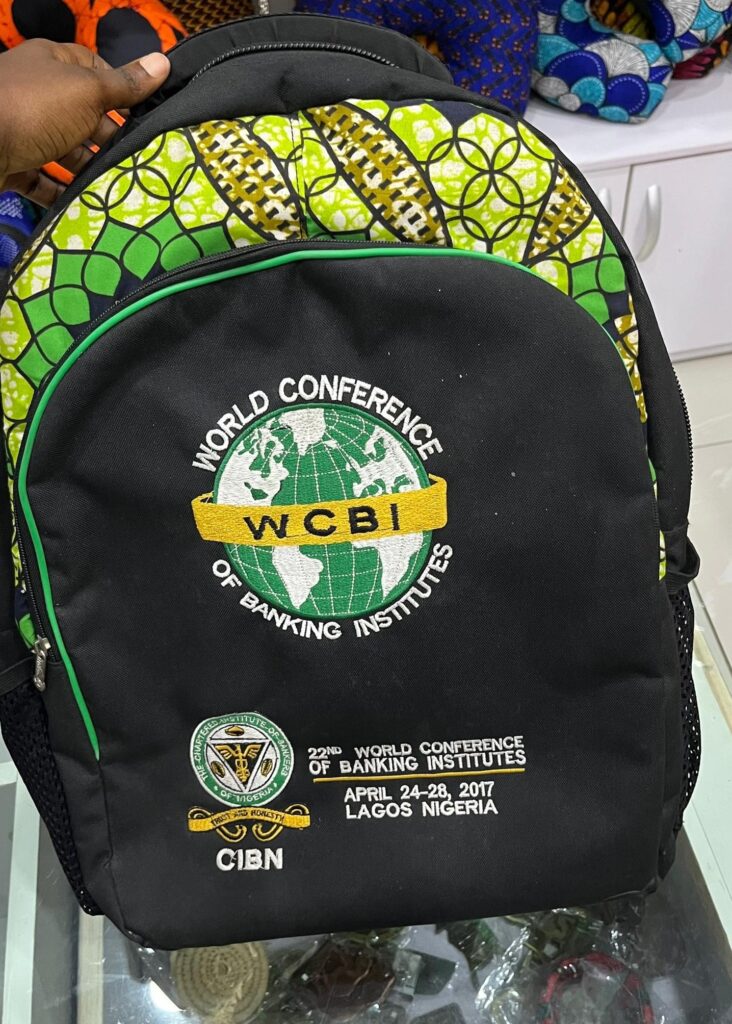
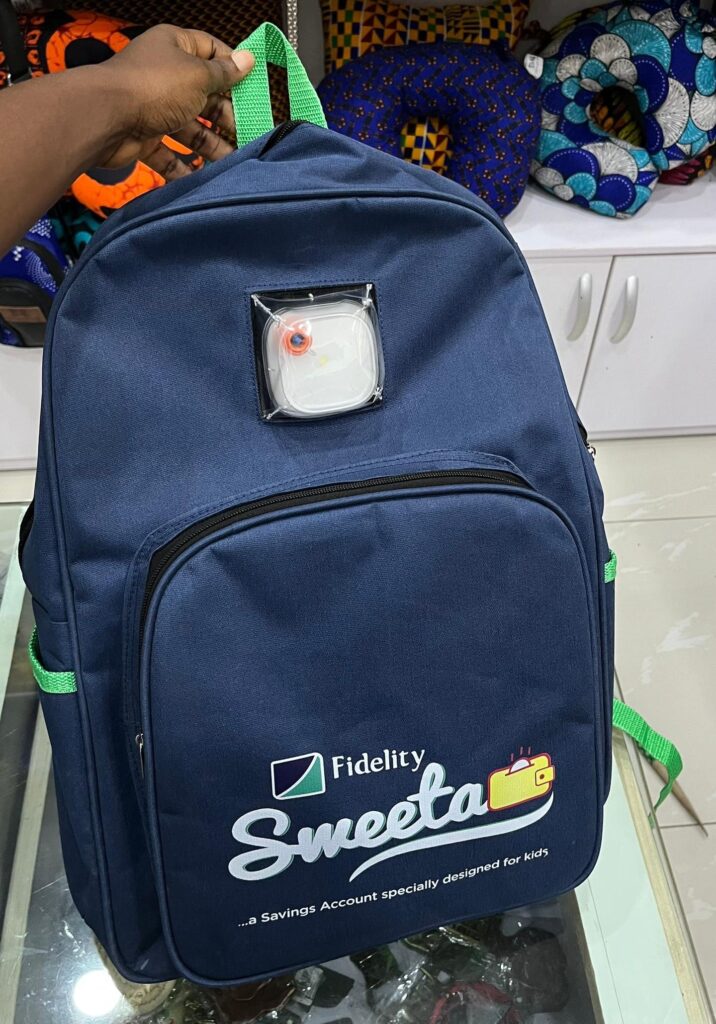
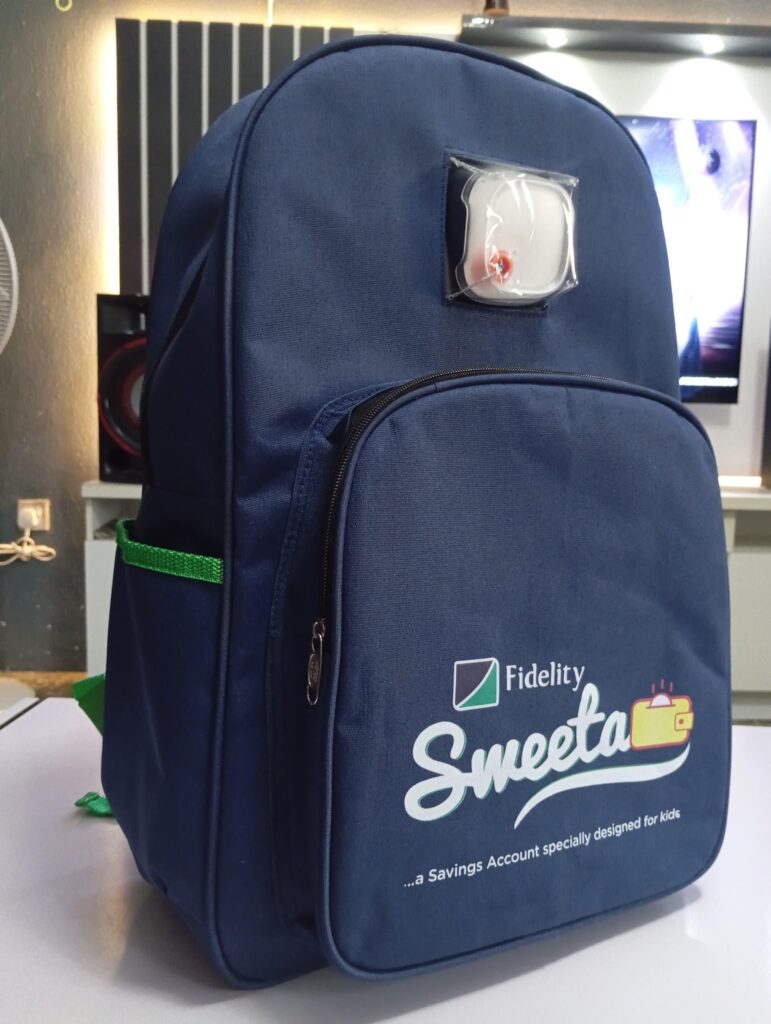
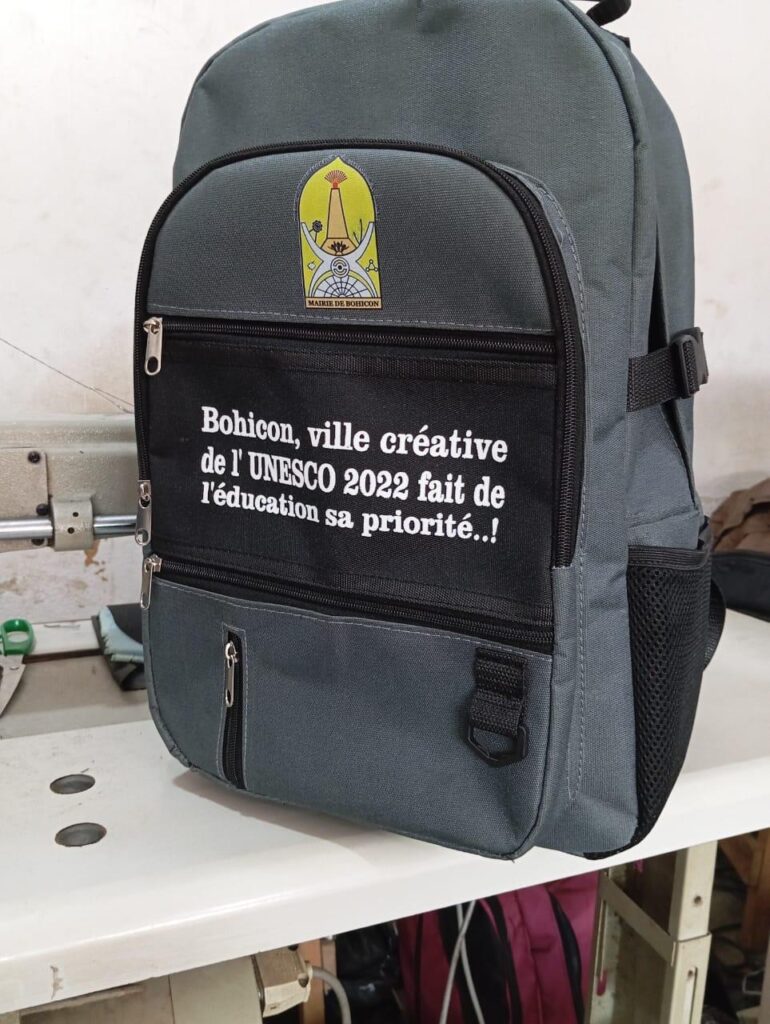
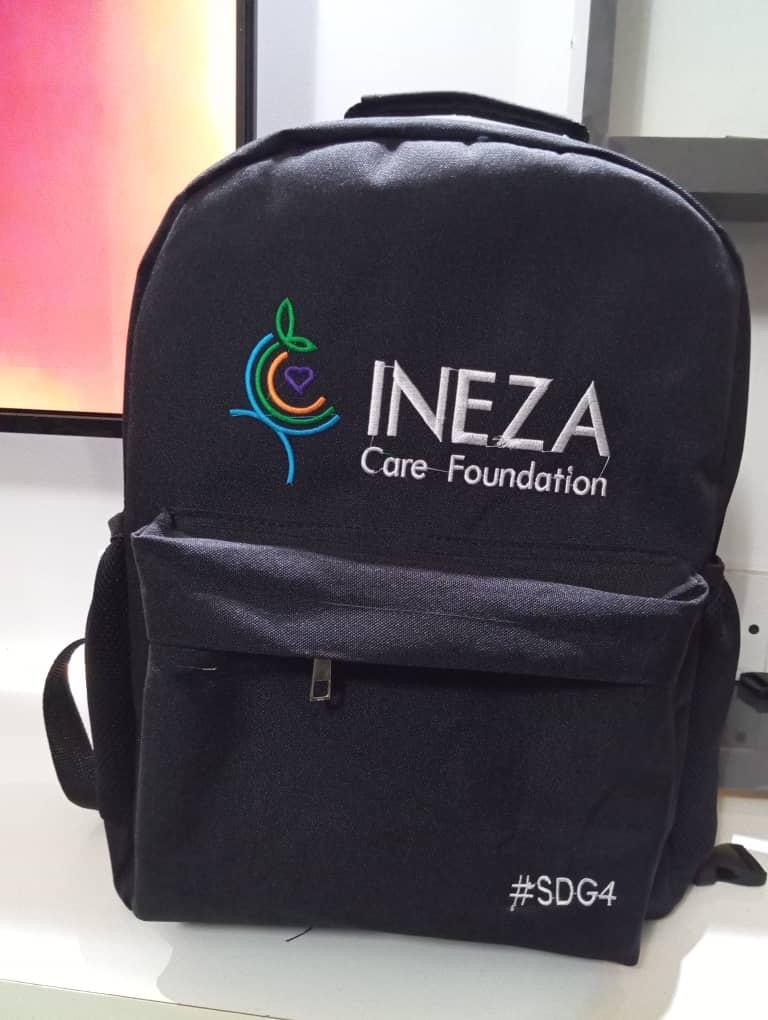
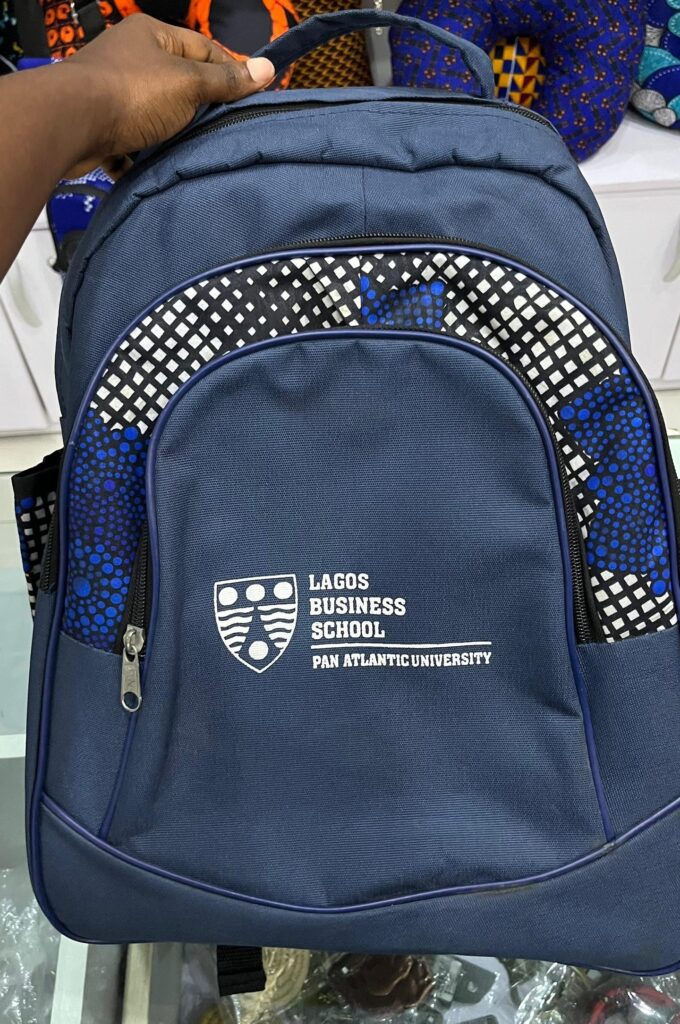
A quality backpack protects expensive textbooks from rain and wear. It’s also a visible sign of your NGO’s support, which can help with community recognition and future fundraising.
Chat with Us to Learn More22. African Print (Ankara/Adire) Backpacks
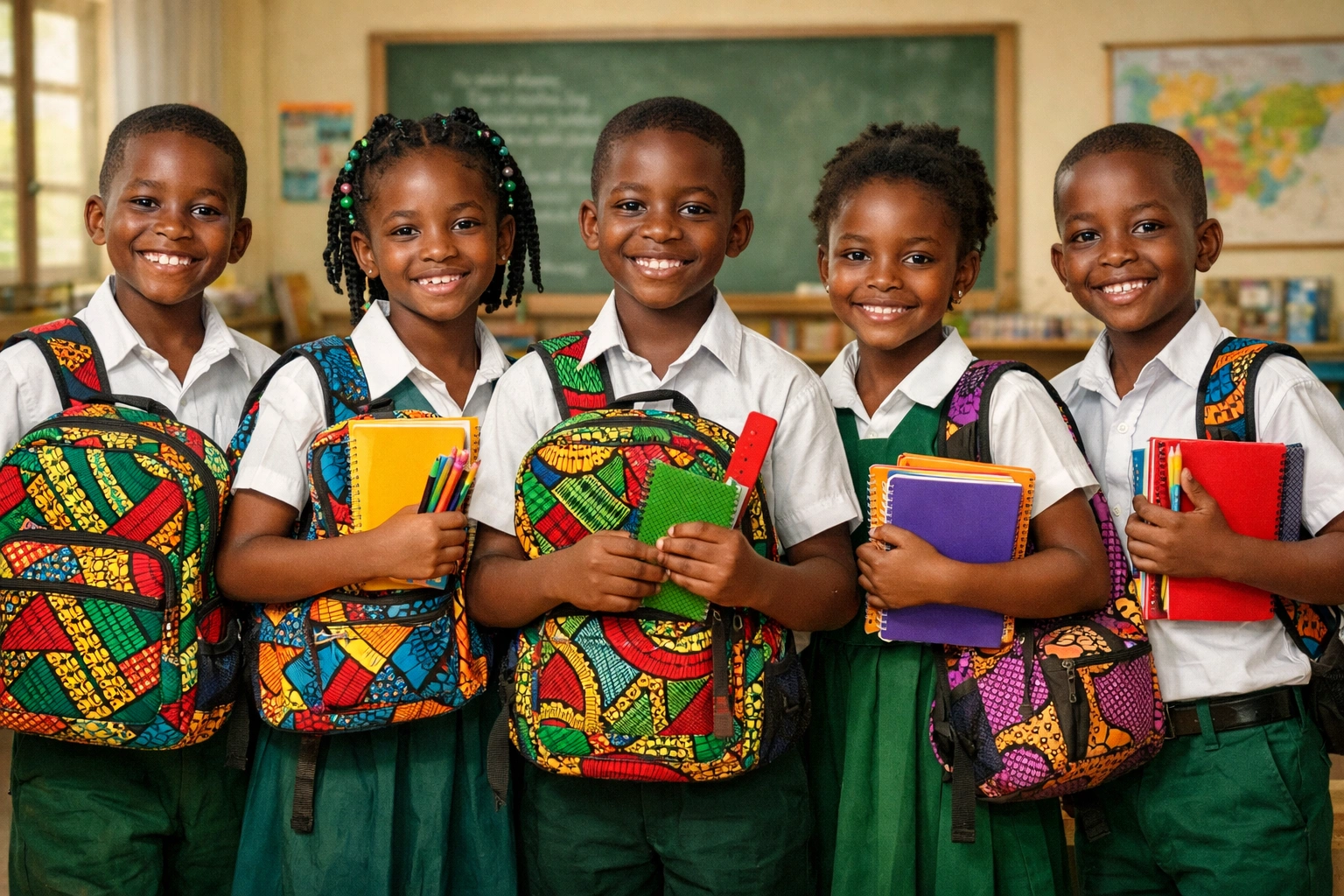
These bags are gorgeous, durable, and celebrate Nigerian culture. When a child carries an Ankara backpack, they’re carrying their heritage with pride. Plus, they’re built to handle heavy textbooks and rough daily use.
23. New School Uniforms (The “Uniform that Grows”)
Innovative adjustable uniforms can last multiple years as a child grows. This addresses the constant problem of kids quickly outgrowing their clothes, which forces parents to buy replacements they can’t afford.
24. Durable Black School Sandals
Some children walk barefoot to school because their families can’t afford shoes. This isn’t just about dignity—it’s about preventing foot injuries and parasitic infections from soil.
25. White Cotton Socks (Bulk Packs)
Uniforms often require specific colors. Providing socks in bulk ensures students can maintain a clean, complete uniform, which reduces the shame that keeps some kids home.
26. Custom Branded T-Shirts for Sports and Clubs
When students have matching team shirts, it builds school spirit and a sense of belonging. They’re not just individuals—they’re part of something bigger. African Things is a supplier of high quality custom branded T-Shirts for different use cases.
Chat with Us to Learn More27. Cardigans or Sweaters for the Harmattan Season
Early mornings during Harmattan can be surprisingly cold. Students without warm layers get sick or arrive late because they’re waiting for the day to warm up.
28. Physical Education (PE) Kits
Many students play sports in their school uniforms because they don’t have PE clothes, which ruins the uniform and creates hygiene issues. Dedicated athletic wear solves both problems.
29. School Berets or Caps
These complete the uniform and provide sun protection during outdoor assemblies. They’re small items that make a big difference in student comfort and compliance with school rules.
30. Raincoats and Large Umbrellas
During rainy season, attendance plummets because students get soaked on the way to school. Raincoats remove this barrier entirely.
Health, Nutrition, and Hygiene (Because Hungry Kids Can’t Learn)
There’s a direct line between nutrition and academic performance. A hungry child cannot concentrate, no matter how good the teacher is.
31. School Feeding Programs (Daily Nutritious Meals)
Programs like Lagos Food Bank’s EDUFOOD show that when you feed students, attendance goes up, concentration improves, and comprehension increases. Food is foundational.
32. Bulk Dry Food Packs for Families
When you support the whole family with food packs, children don’t have to hawk goods on the street to help buy food. They can focus on being students.
33. Reusable Water Bottles (BPA-Free)
Students spend money daily on sachet water, which adds up and harms the environment. A reusable bottle cuts costs and promotes sustainability.
34. Insulated Lunch Boxes
A proper lunch container keeps food fresh and safe. It’s a small dignity that helps students maintain hygiene and enjoy their meals.
35. Comprehensive First Aid Kits for Schools
Most public schools have zero medical supplies. A well-stocked first aid kit can prevent a small cut from becoming a serious infection.
36. Sanitary Pads and Menstrual Hygiene Kits
Period poverty is real and devastating. Girls miss up to a week of school every month because they can’t afford pads. Providing them regularly keeps girls in school and on track.
37. Reusable Menstrual Cups
For a more sustainable solution, menstrual cups last for years. They’re perfect for older students and eliminate the recurring cost of disposable pads.
38. Liquid Soap and Hand Sanitizer Bulk Dispensers
In overcrowded classrooms, hand hygiene prevents the spread of disease. Bulk dispensers are cost-effective and keep everyone healthier.
39. School Water Filtration Systems
Access to clean drinking water reduces waterborne diseases dramatically. A borehole or filtration system serves the entire school community.
40. Treated Mosquito Nets for Boarding Students
Malaria is a leading cause of student absenteeism. For boarding schools, providing treated nets is a direct intervention that keeps students healthy and in class.
Infrastructure and Long-Term Investments
These are bigger-ticket items that transform the physical learning environment and have lasting impact.
41. Standard School Desks and Benches
Many rural students still sit on the floor. Proper desks improve posture, focus, and signal to students that their education is valued.
42. Refurbished Container Units (Classrooms/Offices)
Converted shipping containers can become classrooms, labs, or staff rooms quickly and affordably. They’re durable and address severe space shortages.
43. Library Books and African-Authored Literature
When students see themselves in the stories they read—African characters, African settings—they connect more deeply with reading. It improves literacy and cultural pride.
44. Correction Pens and Stationery Organizers
Pencil cases and correction pens help students keep work neat and develop organizational skills. These small habits build professional attitudes.
45. Blankets and Pillows for Pre-School Nap Time
Young children need rest for proper development. Comfortable, clean bedding makes nap time restorative instead of uncomfortable.
46. Personal Hygiene Kits (Toothbrush and Paste)
In very poor communities, basic hygiene items are luxuries. Providing them teaches healthy habits and builds self-respect.
47. Teacher Professional Development Manuals
When you improve a teacher’s skills, you improve outcomes for every student they’ll ever teach. It’s an investment with exponential returns.
48. Fencing and Perimeter Security
With security threats including kidnapping in some regions, proper fencing protects students and gives parents peace of mind about sending their children to school.
49. Direct Scholarship Grants (Fee Support)
Even though primary education is technically free, hidden fees keep the poorest children out. Paying these fees directly removes this final barrier to enrollment.
50. Durable Sports Equipment (Footballs and Volleyballs)
Sports teach teamwork, discipline, and provide healthy physical outlets. Quality equipment lasts for years and serves the entire student body.
So What’s the BEST Donation?
Here’s the honest answer: the best donation is the one that removes the specific barrier keeping children out of that particular school.
For one school, it might be uniforms. For another, it’s food. For a third, it’s desks so students aren’t sitting on concrete floors.
My recommendation? Start with a needs assessment. Talk to the school administration. Ask what their biggest challenge is right now. Then provide that—and do it well.
Why Quality Matters More Than Quantity
I need to emphasize this: it’s better to provide 100 high-quality, durable backpacks than 200 that will tear within a month. Students notice quality. When they receive something well-made, it tells them they’re valued. It builds dignity and pride.
Plus, from a practical standpoint, quality items last longer, which means your investment has more impact over time.
Custom Branding: Good for Everyone
If you’re an NGO, consider custom branding on your donations. A logo on a backpack or t-shirt isn’t vanity—it’s visibility. It helps with:
- Community recognition of your work
- Future fundraising (people see your impact)
- Building relationships for ongoing support
Plus, when done tastefully, it doesn’t detract from the gift at all.
When to Give: Timing Matters
The Nigerian academic calendar has natural windows for maximum impact:
- August/September (Back to School): Uniforms, bags, shoes, and complete stationery sets
- November/December (Harmattan & Exams): Sweaters, food packs, solar lamps
- January (Mid-Year Crunch): Consumables like pens and paper that have run out
- May 27 (Children’s Day): Celebratory items like sports gear and art supplies
Strategic timing ensures your gifts arrive exactly when they’re needed most.
If you’re an NGO searching for things you can give to schools in Nigeria, you’re already part of the solution. The Nigerian education system faces massive challenges, but they’re not insurmountable—especially when people like you step up.
Whether you’re providing pencils or building computer labs, school bags or scholarships, you’re doing something powerful: you’re telling a child that they matter, that their education matters, and that someone believes in their future.
That’s the real gift.
Have questions about bulk orders or custom branding for your NGO? We’re here to help you create donations that are both meaningful and memorable. Let’s work together to keep Nigerian students in school and thriving.