
No products in the cart.
Return To Shop

The Igbo Traditional Marriage Items List and Guide
Planning an Igbo traditional wedding — or just curious about what actually goes into one? This guide breaks down the full Igbo traditional marriage list, item by item, stage by stage, and state by state, so you know exactly what to expect (and budget for) before the big day.
Quick note before we dive in: If you’re the one planning the wedding, you’ll also need souvenirs and gift items for your guests once the ceremony is done. African Things designs and supplies custom, personalized wedding and event souvenirs in bulk — affordable, high-quality, and functional pieces your guests will actually use.
We work with couples, event planners, schools, and NGOs across Nigeria. Scroll to the “Best Souvenirs” section below, or chat with us on WhatsApp to get a bulk quote started.
What Is an Igbo Traditional Marriage?
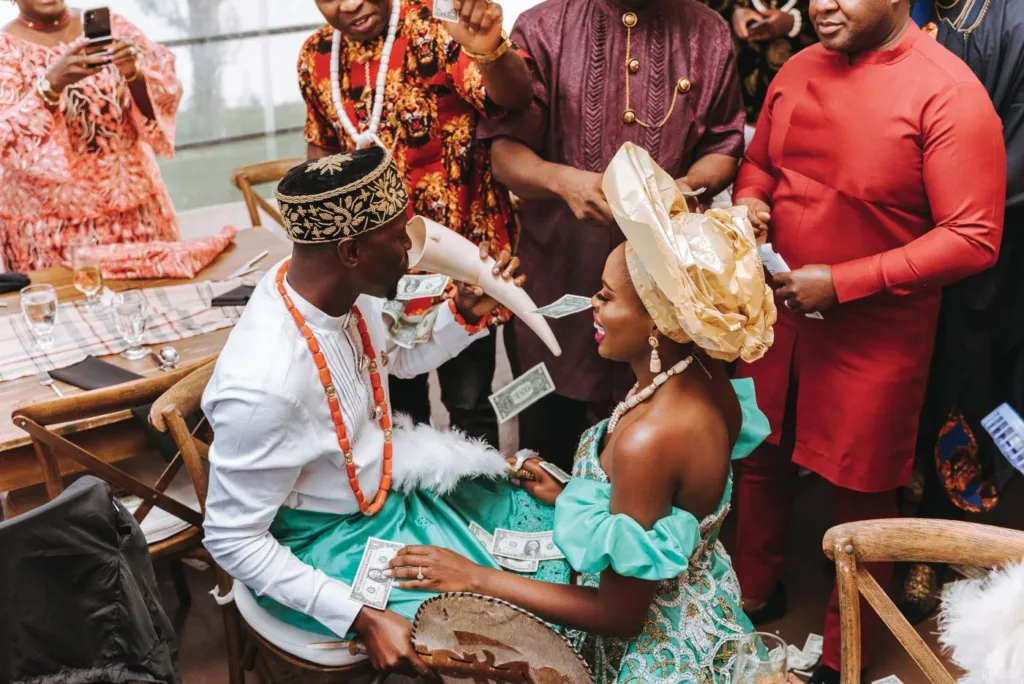
The Igbo traditional marriage is known as Igba Nkwu Nwanyi — literally, “the wine-carrying of a woman.” It isn’t a single event but a series of visits and rites carried out over weeks, months, or sometimes longer, involving the couple’s extended families, kinsmen (Umunna), and the daughters of the lineage (Umuada).
Every item exchanged during this process — from a kola nut to a tuber of yam — carries meaning. Nothing on an Igbo traditional marriage list is random; each item represents respect, hospitality, prosperity, or the formal transfer of a woman’s care from her father’s family to her husband’s family. This is really the heart of any traditional marriage in Nigeria: it’s a union between two families, not just two individuals.
One important thing to know upfront: there is no single, fixed “Igbo list.” The exact items and quantities are set by each community’s own marriage committee, so a list from a village in Anambra may differ slightly from one in Imo or Ebonyi. What stays consistent across virtually every Igbo community is the category of items required — and that’s what this guide focuses on.
What Are the Traditional Items Used for an Igbo Marriage Ceremony?
If you’re wondering what items are commonly used in Igbo marriage ceremonies, here are the core ones you’ll find on almost every list, along with what each one symbolizes.
1. Kola nut (Ọjị Igbo) – Welcome, hospitality, peace, and life itself — no serious Igbo gathering begins without it. There’s a popular saying: “He who brings kola brings life.”
2. Alligator pepper – Presented alongside kola nut as a further sign of hospitality to the elders and ancestors.
3. Palm wine – Gives the ceremony its name. Symbolizes joy and — through the bride’s wine-carrying ritual — her public acceptance of her groom.
4. Yam tubers – Wealth, sustenance, and prosperity. Yam is historically the “king of crops” in Igboland.
5. Goats / livestock – Shows the groom can provide for his new family; used to feed guests at the celebration.
6. Wrappers, George fabric, lace – Given to the bride’s mother and female relatives as a sign of honor and respect.
7. Coral beads & jewelry – Worn by the bride (and often her mother) as a symbol of status, femininity, and cultural pride.
8. Cash gift (bride price) – A modest, symbolic sum — it honors the bride’s upbringing rather than “buying” her.
The Igbo Introduction List: What the Groom Brings First
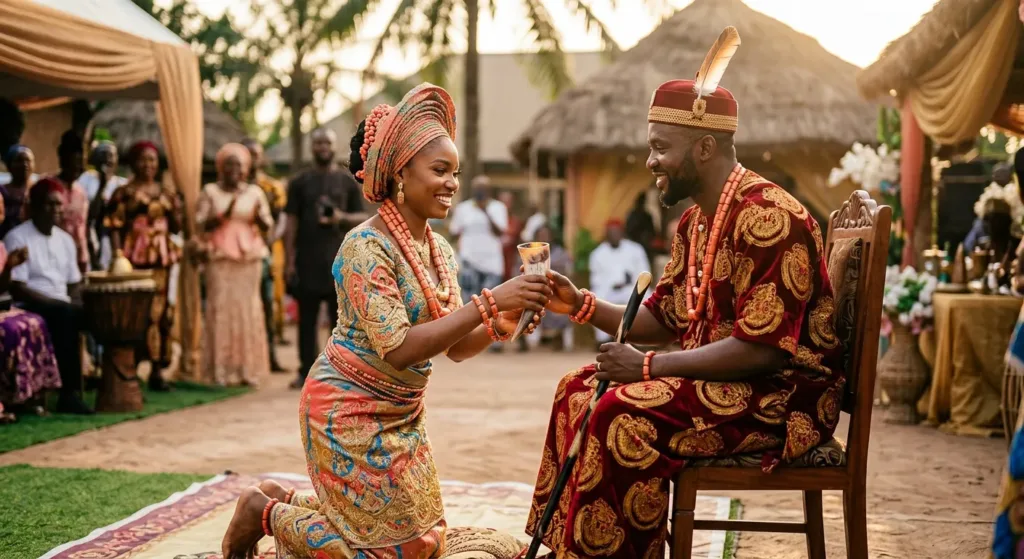
Before the full traditional marriage list even comes into play, there’s an earlier stage worth understanding: the Igbo introduction list, tied to the “knocking on the door” visit (Iku Aka).
This is the groom’s very first formal visit to the bride’s family, where he (with a few family members) announces his intention to marry their daughter. It’s traditionally a lighter, smaller gift set than the full marriage list — but it still matters, because it sets the tone for everything that follows. It typically includes:
- A gourd or bottle of palm wine
- Kola nuts
- Alligator pepper
- A bottle of good wine, whisky, or schnapps
- Sometimes tobacco or snuff for the elders
- A small cash gift
If the visit goes well and the bride confirms she knows and accepts the groom, the bride’s family hands over the full traditional marriage list — the detailed items covered in the next section.
Full Igbo Traditional Marriage List: Items by Category
This is the part most people search for: the actual list of items used in traditional marriages in Nigeria by the Igbos. While exact quantities vary by community, the list is almost always organized into these categories.
1. Kola Nuts & Alligator Pepper
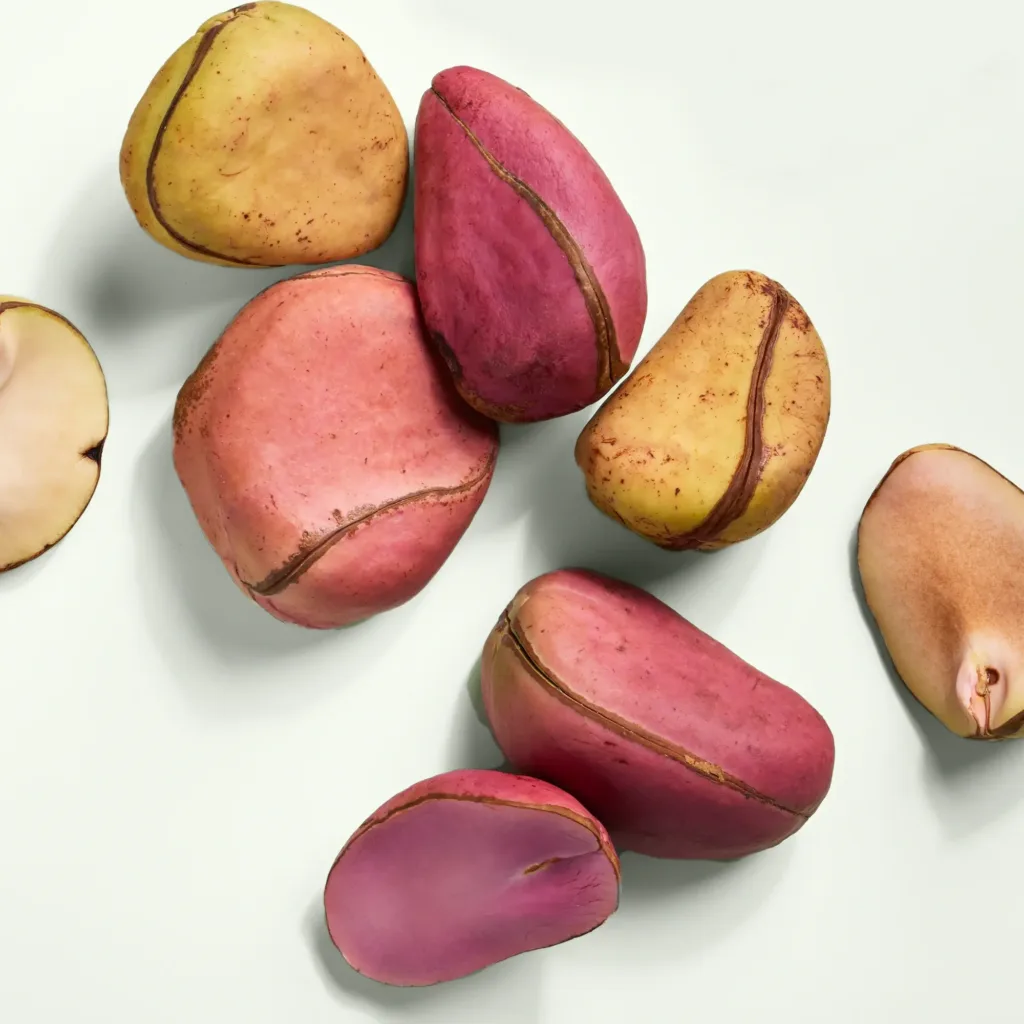
Usually presented in generous quantities (often a dozen or more kola nuts) and broken at each formal meeting as a blessing.
2. Palm Wine & Alcoholic Drinks
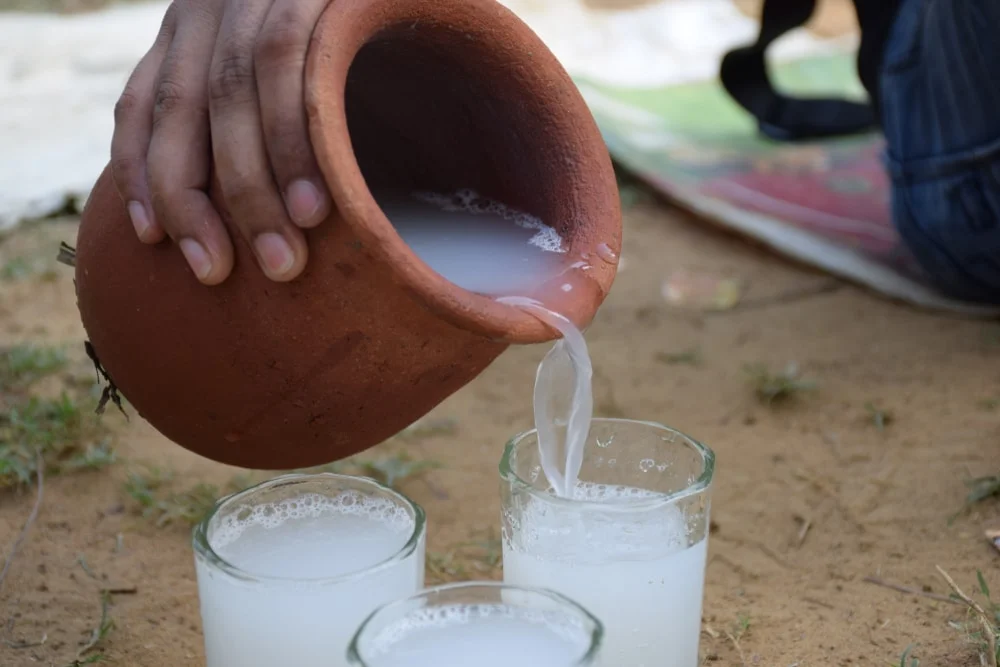
Gallons of palm wine for the wine-carrying ceremony, plus bottles of schnapps, gin, or other spirits for the elders — these are used in the actual rituals, not just for drinking.
3. Staple Foods
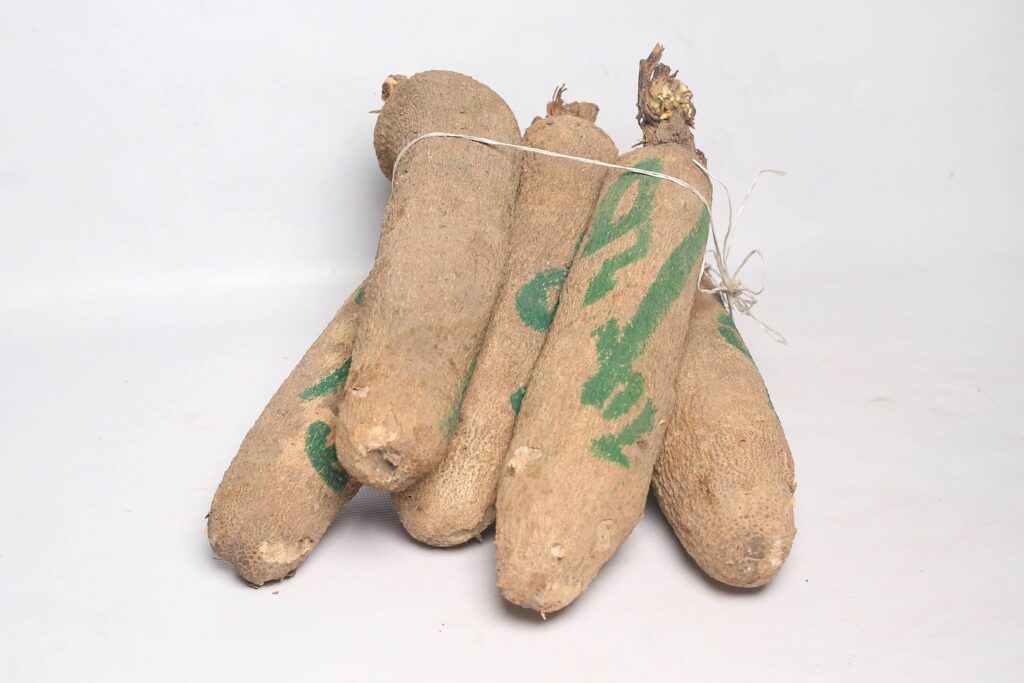
Tubers of yam, bags of rice, stockfish, palm oil, groundnuts, and beans — the practical foundation for the wedding feast, and a symbol of the groom’s ability to provide.
4. Livestock
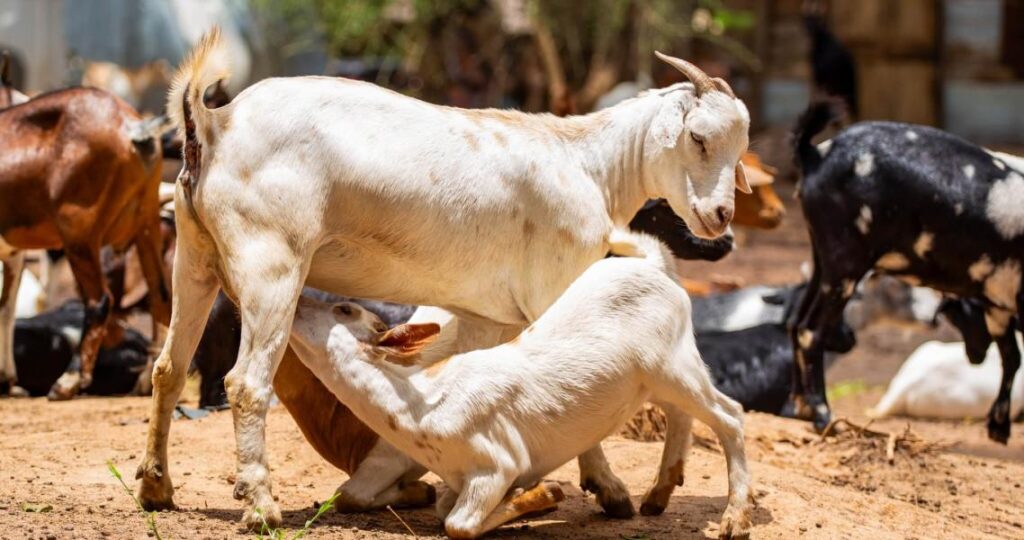
Live goats (sometimes chickens, and in a few communities, a cow) for sacrifice and feasting.
5. Beverages for Guests
Crates of beer, soft drinks, and malt drinks to entertain everyone at the celebration.
6. Clothing & Textiles
George or lace wrappers, aso-ebi fabric, blouse materials, and head ties (ichafu) — typically given to the bride’s mother, the Umuada, and other female relatives. Isi-agu shirt material is sometimes requested for the father-in-law too.
7. Jewelry & Accessories
Coral necklaces and bracelets for the bride and senior women in the family; occasionally wristwatches, umbrellas, or a ceremonial walking stick for the groom’s side.
8. Toiletries & Household Goods
Everyday items like soap, toothpaste, towels, cooking pots, and basins — practical gifts that help stock the bride’s new home.
9. Cash (The Bride Price)
Always included, but deliberately modest and symbolic — the point is to honor the bride’s upbringing, not to place a “price” on her.
10. New-Home Gifts (Idu Ulo)
After the ceremony, it’s customary for the bride’s family to send her off with housewarming gifts — bedding, kitchenware, and sometimes appliances or furniture, depending on what the family can afford.
How the List Varies by State
The core items above appear across every Igbo state, but here’s how things tend to look in specific regions.
Anambra State
In areas like Awkuzu and Onitsha, the groom’s people arrive for the “knocking” visit with palm wine, kola nuts, and tobacco or snuff. The full list that follows typically includes dozens of yam tubers, bags of rice, crates of drinks, and multiple cartons of gari or stockfish. Clothing gifts — George or lace fabric for the bride’s mother and female elders, plus aso-ebi for her sisters — are a big part of the list, alongside coral or gold jewelry. Guests often “spray” the bride and groom with cash during the ceremony as a gesture of goodwill.
Imo State
Imo State — particularly among the Mbaise and Orlu Igbo — is known for longer, more elaborate lists. This usually means larger quantities of the standard items: many tubers of yam, several crates of drinks, enough goat or chicken meat for a large guest list, plus fine textiles and jewelry for family members. Toiletries and cosmetics often appear as well, and honorary gifts (like a wristwatch or umbrella for an elder sister) are common.
Abia State
Communities such as Bende and Ngwa in Abia follow the familiar pattern — kola nuts, palm wine, yams, rice, goats or chickens, schnapps or other spirits, and fabric like George or wrapper material. Toiletries and a cash gift round out the list.
Enugu State
In Enugu communities like Nsukka and Ngwo, lists closely mirror the general pattern: kola nuts, yams, palm wine, crates of soda and beer, live goats or chickens, and handwoven cloth. Brides here often carry a colorful hand fan (and sometimes an umbrella) as part of the ceremony, and multiple aso-ebi fabrics may be requested for the bridal train.
Ebonyi State
Ebonyi — especially the Izzi, Afikpo, and Abakaliki areas — is generally associated with more moderate lists. A typical Izzi list might call for around 10 gallons of palm wine, two dozen kola nuts, cartons of beer or malt drinks, and clothing for the bride’s parents, alongside a large goat, bags of rice, tubers of yam, and palm oil for the wider family. Some Izzi communities traditionally request a native cow, though this is often optional and can be replaced with goats or an equivalent cash sum.
What the Bride and Groom Wear | Igbo Traditional Marriage Attires
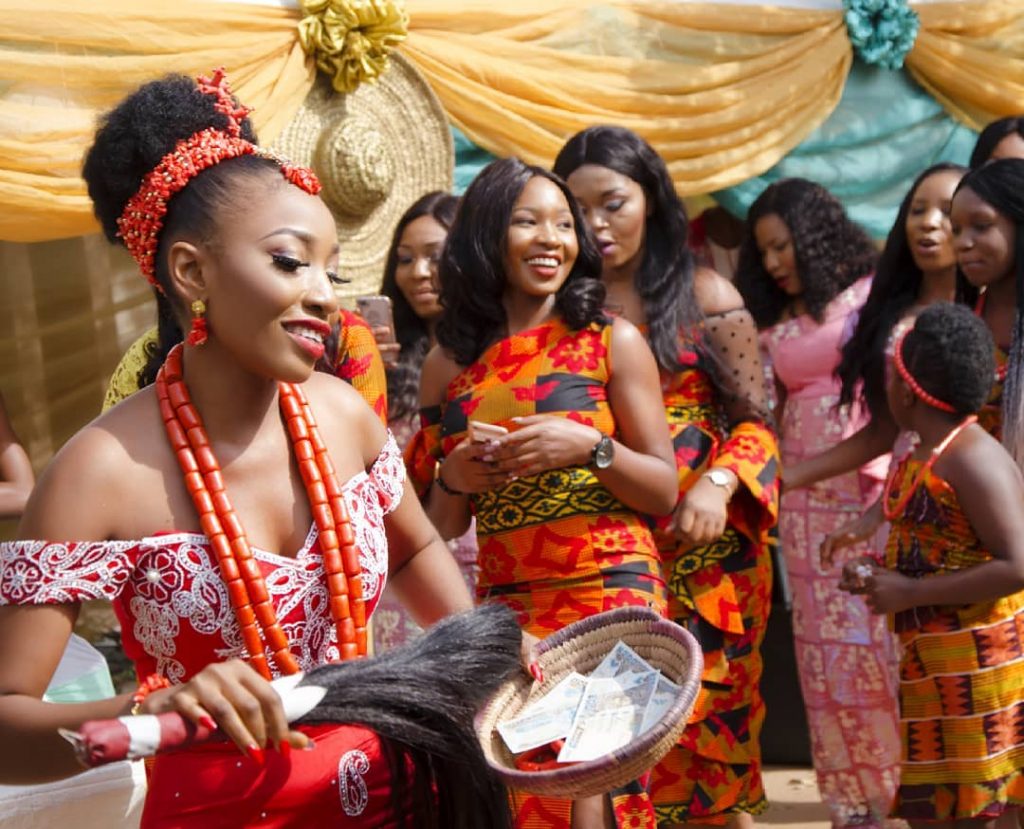
Beyond the negotiated list, there are ceremonial items that make the wine-carrying day (Igba Nkwu) visually unforgettable — and they matter just as much culturally.
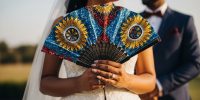
The bride typically wears a brightly colored blouse with a double wrapper (Ankara, Akwete, Akwa Ocha, or lace), a large head tie (ichafu), waist beads (mgbaji) symbolizing fertility and femininity, coral necklaces and bracelets, and carries a decorative hand fan (akupe) — often with money tucked inside to “spray” on guests as she looks for her groom in the crowd.
The groom usually wears an embroidered tunic called isi-agu (recognizable by its lion motifs), matching trousers, a small cap (okpu agu — with an eagle feather for titled men), coral jewelry, and sometimes carries a ceremonial walking stick as a symbol of authority. The palm wine used in the ritual is traditionally served in a carved gourd or horn cup.
Best Souvenirs for a Nigerian Wedding — What Your Guests Will Actually Love
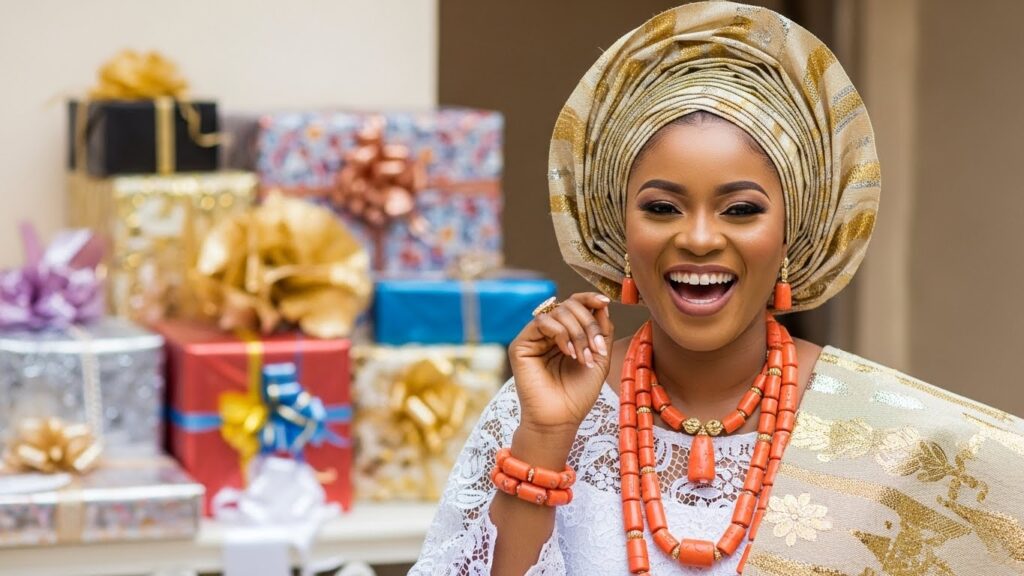
Once the marriage list is settled and the ceremony date is fixed, the next question every couple or event planner faces is: what do we give our guests to take home? Good wedding souvenir ideas should be affordable in bulk, high quality, and — most importantly — actually useful, so they don’t end up forgotten in a drawer.
Here are some of the best-loved options for Igbo and Nigerian traditional weddings, all available as custom, personalized, bulk orders from African Things:
- Custom tote bags — with the couple’s names, wedding date, or a personalized message printed on
- Ankara-infused gift bags — a stylish, culturally rich touch for any Igbo traditional wedding
- Ankara apron and oven mitt sets — genuinely useful for guests who love to cook
- African print foldable hand fans — a nod to the akupe used in the ceremony itself, and practical for outdoor events
- Makeup and toiletry pouches/bags — a favorite among female guests
- Ankara wallets — for both men and women
- Keychains and keyholders — small, affordable, and always useful
- Personalized jotters, notepads & exercise books — great for corporate-style or NGO-affiliated weddings
- Personalized souvenir bags — drawstring bags, paper bags, carrier bags, and tote bags, all brandable
- Ankara waist bags / fanny packs — a trendy, practical option guests will actually wear again
- Personalized or Ankara throw pillows — a memorable home gift for close family and VIP guests
- Branded face caps or T-shirts — popular for the bridal train, groomsmen, or as general guest favors
Whether you need a few dozen pieces for an intimate ceremony or a few thousand for a large event, African Things handles bulk and wholesale orders for schools, companies, NGOs, and event planners — with fast turnaround and Lagos-based production.
For more ideas and inspiration, check out our full guide on unique wedding souvenir ideas in Nigeria.
Planning your traditional wedding and need custom souvenirs in bulk?
Chat With Us on WhatsAppFrequently Asked Questions
What are the traditional items used for an Igbo marriage ceremony?
The core items include kola nut and alligator pepper, palm wine, tubers of yam, live goats or other livestock, crates of drinks, fabrics like George and lace wrappers, coral beads and jewelry, toiletries and household items, and a symbolic cash bride price. Together, these cover the ceremonial, practical, and honorary needs of the marriage rites.
What are items used in traditional marriage in Nigeria generally, beyond Igbo culture?
Most Nigerian ethnic groups share a similar structure — kola nut or its equivalent, drinks, food items, clothing for the bride’s family, and a bride price or dowry. The specific items, names, and rituals differ by ethnic group (Yoruba, Hausa, Edo, and others each have their own traditions), but the underlying idea — families exchanging meaningful gifts to formalize a union — is consistent across Nigeria.
What are the items needed for a traditional Igbo wedding?
At minimum: kola nuts, palm wine, yam tubers, a goat or other livestock, crates of soft drinks and beer, wrapper or George fabric for the bride’s mother, coral beads for the bride, toiletries for the household, and the agreed bride price. The exact quantities depend on the specific community’s marriage list.
What items are commonly used in Igbo marriage ceremonies?
Kola nut, palm wine, yam, livestock, fabric, and coral jewelry are the items you’ll find in nearly every Igbo marriage ceremony, regardless of state. What varies is the quantity and a handful of community-specific additions.
Does the Igbo traditional marriage list differ by state?
Yes, though the core categories stay the same. Imo State lists tend to be longer and more elaborate; Ebonyi lists are generally more moderate; Anambra places strong emphasis on textiles and jewelry; and Abia and Enugu largely follow the standard pattern. Even within a single state, individual communities set their own specific quantities.
What is the Igbo introduction list?
It’s the smaller gift set the groom brings on his very first formal visit to the bride’s family (the “knocking on the door” stage) — typically palm wine, kola nuts, alligator pepper, a bottle of good wine or whisky, and a small cash gift. It’s separate from, and comes before, the full traditional marriage list.
Is the bride price meant to “buy” the bride?
No. Despite common misconceptions, the cash portion of the list is intentionally kept modest and symbolic. Its purpose is to honor the bride’s upbringing and formally acknowledge the union between families — not to assign a monetary value to the bride herself.

Related posts

Choosing the perfect wedding anniversary gift for your wife is about finding something thoughtful, meaningful,...

If you’ve been invited to a Nigerian wedding, congratulations! You’re about to experience one of...
Are you searching for the perfect list of affordable premium wedding souvenir gift ideas in...
Add comment
You must be logged in to post a comment.