
No products in the cart.
Return To Shop

African Prints Explained: Ankara, Adire, Aso Oke, Bogolanfini & Kente
When people hear the phrase African print, one fabric often comes to mind: colourful Ankara.
But here is something important to know:
Not every African print is Ankara.
Africa has a rich textile heritage made up of many different fabrics, weaving traditions, dyeing techniques and artistic practices. Ankara is only one part of that story. Other important African textiles include Adire, Aso Oke, Bogolanfini (mud cloth) and Kente, each with its own history, production method, cultural associations and uses.
For example, Adire is traditionally a Yoruba resist-dyed textile from southwestern Nigeria. Aso Oke is a Yoruba handwoven prestige cloth. Bogolanfini is a traditionally handwoven and mud-dyed textile associated especially with the Bamana people of Mali. Kente is a Ghanaian woven textile associated with communities including Asante and Ewe weaving traditions.
Understanding these differences is important, especially when choosing African fabrics for clothing, gifts, souvenirs, bags or other products.
It is also part of what makes African Things passionate about African-inspired products. Rather than treating every colourful African textile as simply “Ankara,” African Things celebrates the variety of African textile traditions and the craftsmanship behind them, incorporating materials and design influences such as Ankara, Adire, Aso Oke, Kente and other African-inspired textiles into practical products and gifts.
So, if you have ever wondered about the difference between African print vs Ankara, Adire vs Ankara, or Kente vs African print, this guide will help.
Also, to see our diverse and unique African inspired collection, check our shop page or visit our Etsy page.
African Print Is an Umbrella Term
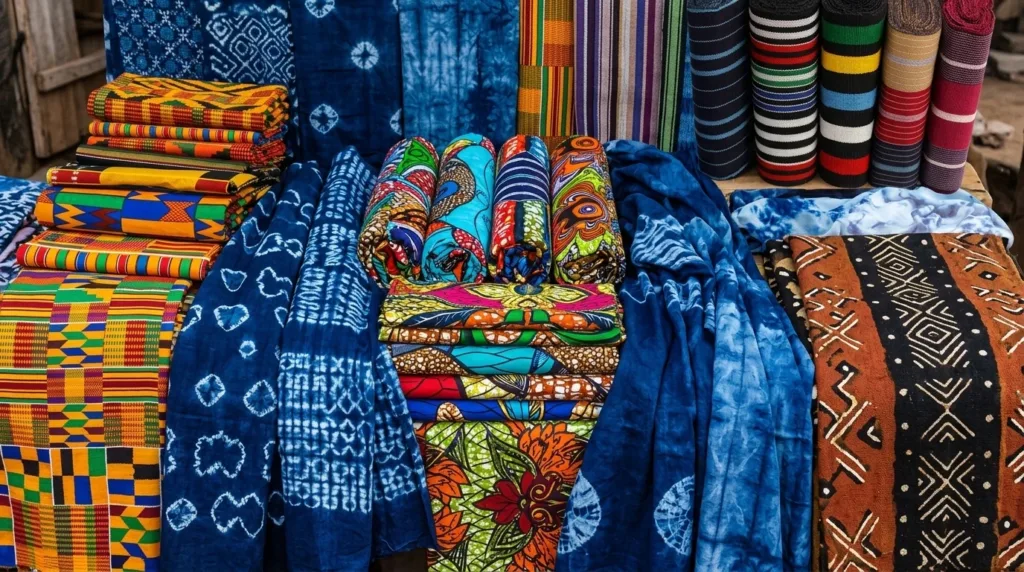
The phrase African print is commonly used today to describe colourful textiles associated with African fashion and design. However, it does not refer to one particular fabric.
Think of “African print” as an umbrella expression.
Under that broad description, you may encounter Ankara or African wax print, which is an industrially printed cotton textile strongly associated with African fashion; Adire, a Yoruba resist-dyed textile traditionally associated with southwestern Nigeria; Aso Oke, a Yoruba handwoven prestige cloth; Bogolanfini or Bogolan, a Malian mud-dyed textile associated especially with the Bamana; and Kente, a Ghanaian strip-woven textile associated with different Ghanaian weaving communities.
And these are only some of the many textile traditions found across Africa.
These fabrics are not interchangeable. They can differ in how they are produced, where they originated, what materials are used, who traditionally made them, what their patterns communicate and how they are worn or used.
That diversity is important to African Things because African-inspired design does not have to mean one particular fabric or one particular look. It can mean drawing respectfully from the many textile traditions, colours, techniques and creative expressions found across the continent.
Talk to Us About African Inspired Products1. Ankara / African Wax Print
What Is Ankara?
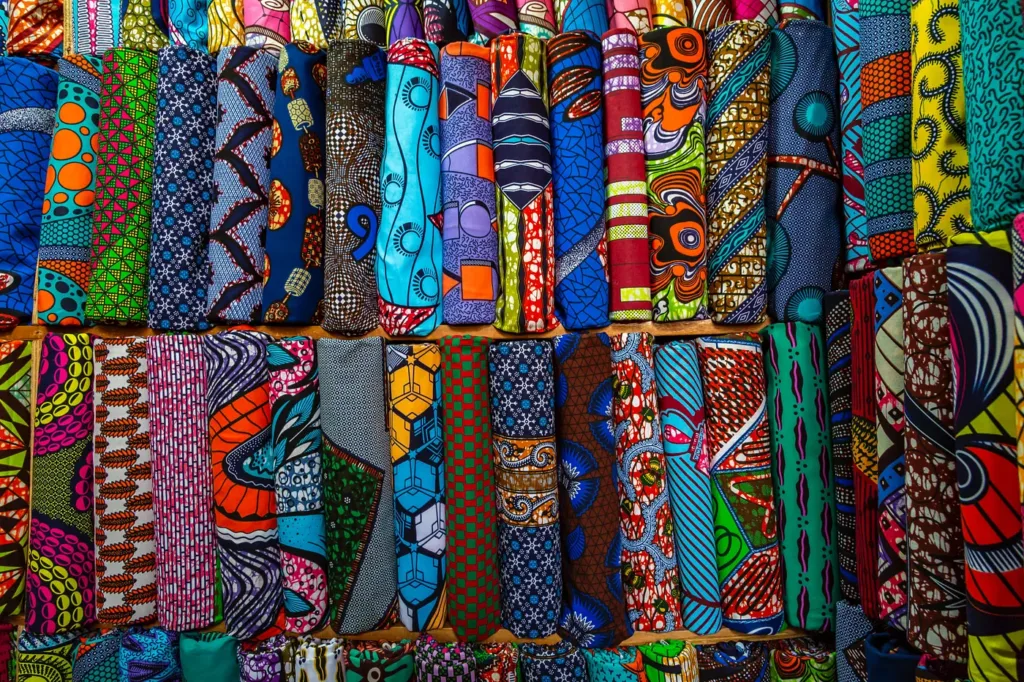
Ankara is a widely used name for brightly patterned cotton fabric associated with African fashion, particularly in West Africa and Nigeria.
It is also commonly called African wax print, Dutch wax or wax print.
However, there is an important historical detail:
Ankara did not originate as an ancient African textile tradition.
The modern wax-print industry developed from European attempts in the 19th century to mechanically reproduce Indonesian batik, a traditional wax-resist textile. Dutch manufacturers developed industrial processes for producing these fabrics, and the resulting textiles found a much stronger market in West Africa than they did in Indonesia.
This makes the history of Ankara particularly interesting. Although the industrial production process has European and Indonesian roots, the fabric became deeply embedded in African societies and developed into an important part of African fashion and cultural expression.
Over time, African consumers, designers and communities gave these fabrics local meanings, names and uses. Patterns became part of social communication, identity and fashion.
Today, wax-print textiles are also produced in African manufacturing centres, including Ghana, Nigeria and Senegal.
So it is more accurate to describe Ankara as an African-associated textile with a complex international history than to simply say that it is either “European” or “traditionally African.”
Ask for Samples of Ankara-infused ProductsWhy Is Ankara Sometimes Called African Wax Print?
The phrase African wax print reflects how strongly these textiles became associated with African consumers and fashion.
Ankara is particularly recognizable for its bright colours, repeated motifs, geometric designs, floral and botanical patterns, animals, symbolic imagery, portraits, commemorative designs and large-scale repeating patterns.
An African print pattern can be much more than decoration. Some designs have names associated with people, events, objects or ideas, and the same pattern can acquire different names or meanings in different African countries or communities.
This makes Ankara especially versatile for modern African print fashion and product design.
Is Wax Actually Used to Make Ankara?
This is another common misconception.
Although the fabric is commonly called wax print, modern industrial production does not necessarily involve literal wax in the way people imagine traditional batik production.
The V&A notes that wax is rarely used in the manufacture of modern Ankara despite the continued use of terms such as “African wax” and “Dutch wax.” The production developed from industrial attempts to reproduce Indonesian batik using resin-resist and printing processes.
Types and Quality of Ankara
Consumers may encounter terms such as Dutch wax, Wax Hollandais, Super Wax, Java prints and Fancy prints, as well as local or regional wax-print fabrics.
These terms can refer to differences in manufacturing technique, quality, finish, printing and producer. It is therefore useful not to assume that every colourful cotton fabric sold as “Ankara” has exactly the same manufacturing process or quality.
What Is Ankara Used For?
Ankara is extremely versatile.
It is used for dresses, skirts, shirts, trousers, jackets, headwraps, bags, backpacks, laptop bags, tote bags, shoes, accessories, home décor, souvenir products and corporate gifts.
This versatility is one reason African print fashion has become so popular in Nigeria and internationally.
For African Things, this versatility also makes Ankara valuable beyond clothing. African Things supports the use of African-inspired fabrics in practical, useful products, including items such as tote bags, backpacks, laptop sleeves, souvenir bags, gift bags and other accessories.
The goal is not simply to make something colourful. It is to combine African-inspired design with everyday usefulness, creating products that people can actually carry, use, gift or incorporate into their work and lifestyle.
Whether it is an Ankara tote for everyday shopping, an Ankara backpack for work or school, a laptop sleeve with an African-inspired design, or a custom souvenir bag for an event, Ankara can bring colour and cultural character to an otherwise ordinary product.
2. Adire Fabric
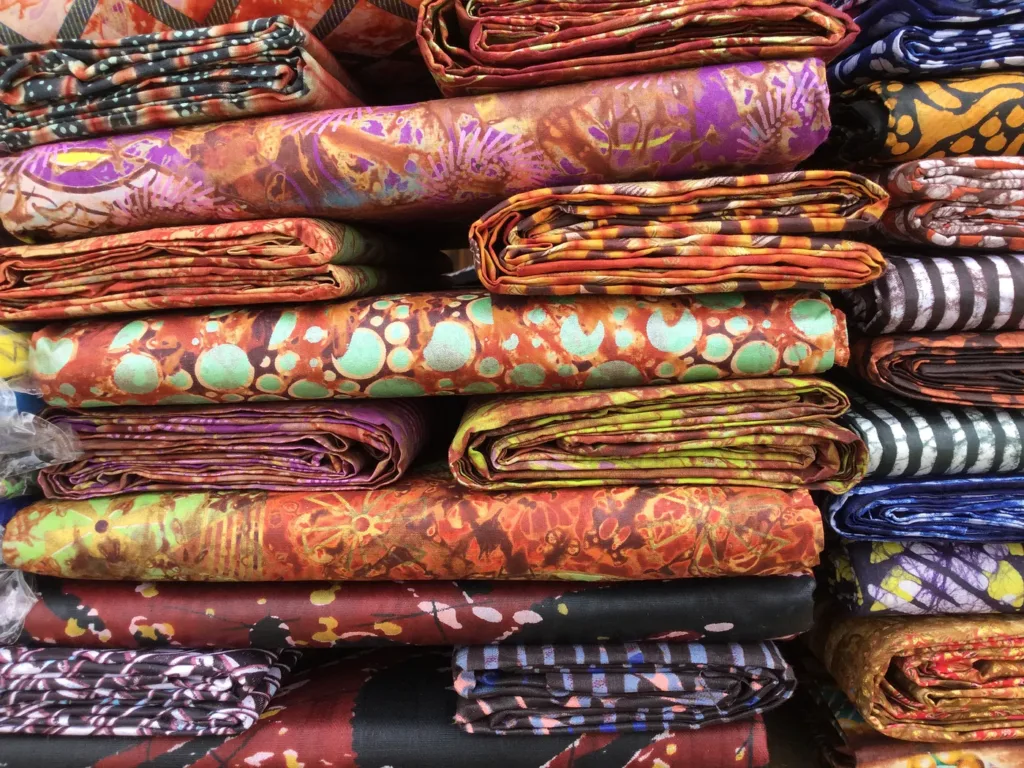
What Is Adire?
Adire is a traditional Yoruba textile associated particularly with southwestern Nigeria.
Unlike Ankara, which is primarily an industrially printed fabric, traditional Adire is created using resist-dyeing techniques.
The fabric is treated in selected areas before being immersed in dye. The treated areas resist the dye, producing patterns when the process is complete.
The V&A describes Adire as indigo-dyed cotton cloth traditionally produced by Yoruba women in southwestern Nigeria.
The word Adire is commonly translated as “tie and dye” in Yoruba, although the textile tradition encompasses several different resist techniques beyond simple tying.
Talk to Us About Adire-infused ProductsWhere Did Adire Originate?
Adire is strongly associated with the Yoruba people of southwestern Nigeria, with Abeokuta and Ibadan being particularly important centres in its history.
The tradition dates to the 19th century, while the term “Adire” became increasingly established in the early 20th century. Imported European cotton shirting material helped makers experiment with new patterns and techniques, contributing to Adire’s development and popularity.
This history demonstrates that African textile traditions have never been completely static. Artisans continually experimented with materials, techniques and designs in response to changing markets and consumer tastes.
Why Is Adire Usually Blue and White?
Traditional Adire is strongly associated with indigo.
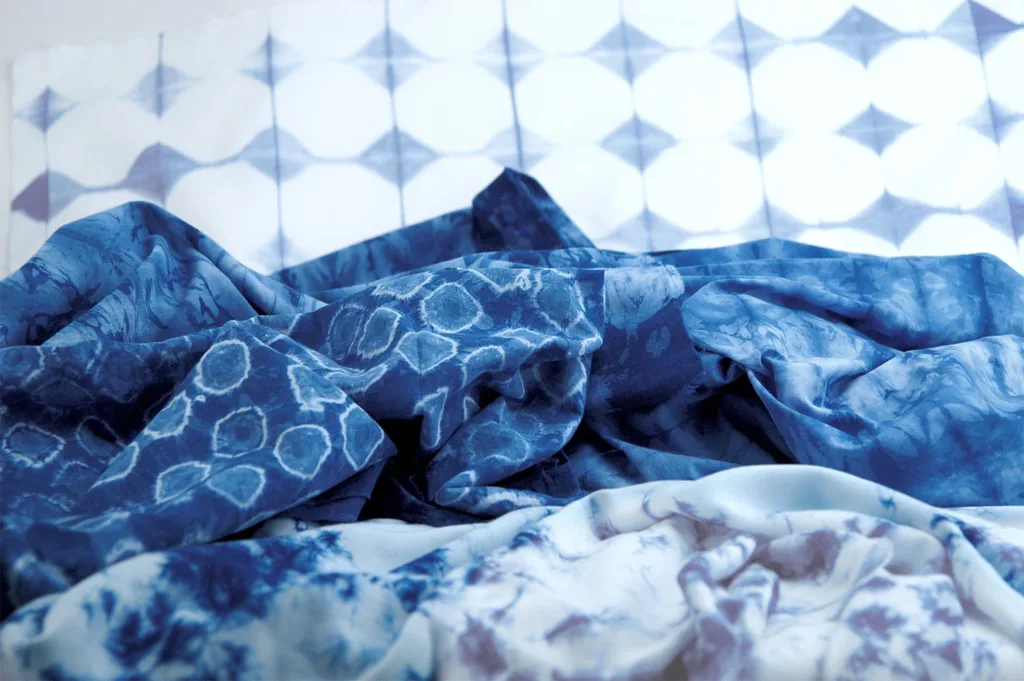
Indigo dye can be produced from indigo plants, and the dyeing process creates the characteristic deep blue shades associated with many historic Adire textiles.
This is why traditional Adire fabric often has a striking blue-and-white appearance.
Modern Adire, however, can use additional colours and contemporary dyeing techniques.
Major Types of Adire
Adire Oniko
In Adire oniko, sections of fabric are tied or bound before dyeing.
Raffia may be used to tightly bind parts of the fabric, while stones, seeds or other objects can be incorporated to create distinctive circular or patterned resist areas.
Adire Alabere
Adire alabere uses stitching as the resist technique.
The fabric is sewn before dyeing so that the stitched sections resist the dye. Both hand sewing and machine sewing have been used in the history of Adire.
Adire Eleko
Adire eleko uses a starch resist.
A paste traditionally made from cassava flour can be applied to the fabric through stencils or by hand. The protected areas resist the indigo dye, revealing the design after dyeing.
The technique allowed artisans to create more elaborate imagery and compositions.
Does Adire Have Meaning?
Yes, but it is important to avoid treating every Adire motif as having one universal meaning.
Adire patterns can relate to plants, animals, objects, places, proverbs, everyday life, local events and social ideas.
Pattern names can also vary between towns or change over time. The V&A, for example, documents an Ibadan pattern known as olosupaeleso, meaning “moons and fruits.”
This means Adire can function as a form of visual communication, with knowledge of patterns and their associations passed between generations.
What Is Yoruba Adire Used For?
Historically, Adire was commonly made into wrappers and garments.
Today, Yoruba Adire can be found in dresses, shirts, skirts, headwraps, scarves, bags, tote bags, accessories, cushions, home décor, contemporary art and souvenirs.
Contemporary makers also experiment with wax, paraffin and block printing alongside traditional resist methods.
For African Things, Adire represents something particularly important: the opportunity to bring a distinctly Nigerian textile tradition into modern, practical products.
Where suitable materials are available, Adire-inspired designs can be incorporated into tote bags, backpacks, laptop sleeves, souvenir bags, gift items and accessories, helping customers enjoy a contemporary product while still connecting with Nigerian textile heritage.
This is part of a broader commitment to supporting African-inspired and locally made products rather than limiting African design to clothing alone.
Adire vs Ankara: What Is the Difference?
The simplest distinction is:
Ankara is primarily printed; traditional Adire is primarily resist-dyed.
Ankara is generally associated with industrial printing, a broad range of bright colours and complex international manufacturing origins.
Adire has Yoruba roots, is traditionally made through resist-dyeing, is strongly associated with indigo and has a long history of hand craftsmanship and locally meaningful patterns.
So Adire is not simply another name for Ankara.
And when African Things incorporates Adire into a product, identifying it as Adire rather than simply calling it “Ankara” helps preserve that distinction.
3. Aso Oke
What Is Aso Oke?
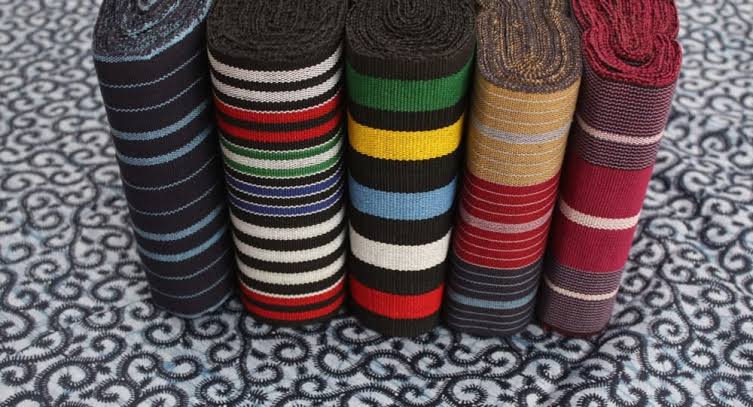
Aso oke (ah-shō-ō-kay) — written in Yoruba as Aṣọ Òkè — is a traditional handwoven Yoruba textile associated with southwestern Nigeria and the wider Yoruba cultural region.
Unlike Ankara, it is not primarily a printed fabric.
Unlike Adire, it is not primarily a resist-dyed fabric.
Aso Oke is fundamentally a woven textile.
The cloth is traditionally constructed from narrow woven strips that are joined together to create a larger textile. Museums describe it as a Yoruba prestige cloth used especially for celebratory and ceremonial occasions.
Talk to Us About Aso Oke-infused ProductsWhat Does Aso Oke Mean?
The name is commonly translated as “cloth from the upland,” “top cloth” or “high-status cloth,” depending on the interpretation and context.
Aso Oke has traditionally been associated with prestige and important occasions.
It is therefore much more than simply an attractive African fabric.
Where Is Aso Oke Made?
Aso Oke is particularly associated with Yorubaland in southwestern Nigeria.
Iseyin in Oyo State is one of the best-known centres of Aso Oke production. Other areas of Yorubaland have also had important weaving traditions.
The textile tradition extends beyond today’s political boundaries because Yorubaland itself spans parts of modern Nigeria, Benin and Togo.
How Is Aso Oke Made?
Traditional Aso Oke is woven on narrow looms.
Rather than producing one huge piece of fabric in a single pass, weavers produce narrow strips which can subsequently be joined together.
The resulting textile can contain stripes, checks, geometric motifs, supplementary threads, openwork, intricate woven patterns and decorative colour combinations.
Museums documenting Aso Oke collections describe techniques including ikat, openwork, carryover threads and mixed strip assemblage.
The Three Classic Types of Aso Oke
Three historic categories are particularly important.
Sanyan is traditionally associated with tan or beige wild silk, particularly silk from the Anaphe moth. It has historically been regarded as an important prestige textile.
Alaari is traditionally associated with rich magenta or purple-red silk. Historical examples used imported silk, including silk that entered West Africa through long-distance trade networks.
Etu is associated with deep indigo-blue cloth. The name is connected to the appearance of the guinea fowl, whose speckled feathers are reflected in some traditional Etu designs.
These three categories form an important historical foundation for Aso Oke, although contemporary weavers have developed many additional colours, materials and designs.
What Is Aso Oke Used For?
Aso Oke is especially associated with important occasions, including weddings, traditional marriage ceremonies, naming ceremonies, funerals, festivals, chieftaincy ceremonies, coronations and other major celebrations.
It may be made into garments and accessories such as agbada, fila, iro, buba, gele, shawls, wrappers, bags and fashion accessories. You can see various dresses made/styled with Aso Oke here.
The Saint Louis Art Museum notes that Aso Oke is used for weddings, naming ceremonies and funerals, with some families preserving important pieces as heirlooms.
For African Things, Aso Oke represents another opportunity to bring Nigerian craftsmanship into products that fit modern lifestyles.
Aso Oke can add texture, structure and a strong sense of Nigerian identity to products such as bags, accessories, souvenir items and special gift products. It can work particularly well when a customer wants something that feels more distinctive than a conventional mass-produced gift.
This is especially relevant for weddings, cultural celebrations, corporate gifts, souvenirs, special events and personalised gifts, where the material itself can become part of the story behind the product.
Why Is Aso Oke Important?
Aso Oke connects craftsmanship, identity, social status, celebration and Yoruba heritage.
It is also an excellent example of why the term “African print” can sometimes be misleading.
Aso Oke is not simply a colourful African print.
It is a woven textile tradition.
4. Bogolanfini: The Famous Malian Mud Cloth
What Is Bogolanfini?
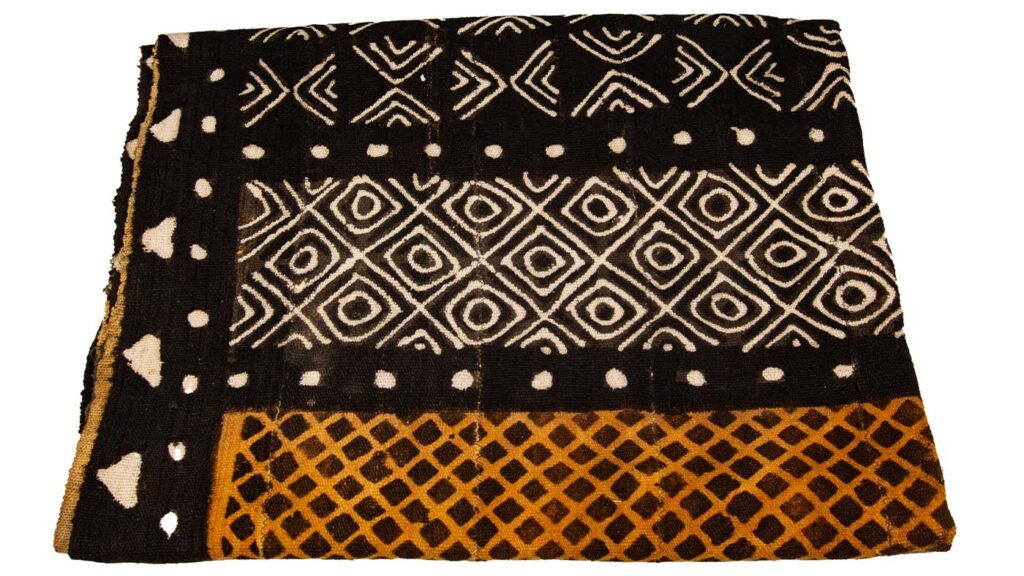
Bogolanfini, also called bogolan or commonly “Malian mud cloth,” is a traditional handmade textile associated especially with Mali and the Bamana people.
The word is commonly translated as “mud cloth.”
But the production process is more sophisticated than simply painting mud onto fabric.
It involves handwoven cotton, plant materials, soil or mud and repeated dyeing and resist processes. The Smithsonian describes Bogolanfini as a long-established Bamana tradition involving handwoven and hand-dyed cloth and applications of plant juices or teas and mud.
Talk to Us About Bogolanfini-inspired ProductsWhere Did Bogolanfini Originate?
Bogolanfini is particularly associated with the Bamana of Mali, although mud-dyeing traditions are found among several Malian communities.
The Smithsonian notes that Bogolanfini is a long-established tradition among the Bamana, a Mande-speaking people living across a large area of Mali.
It is therefore better to say Bamana/Malian textile tradition than to suggest that every form of mud cloth throughout West Africa is identical.
How Is Mud Cloth Made?
Traditional Bogolanfini production can involve several stages.
Cotton is woven into cloth, often in narrow strips that are later assembled. Plant materials are used to create dyes or treatments, while iron-rich soil or mud is applied to the cloth.
The Smithsonian documents a process in which iron-rich soil is collected, mixed with water and fermented before being applied to the cloth. Individual artists may have their own recipes and methods.
Repeated applications help create the characteristic dark patterns.
The finished cloth often has an earthy visual palette involving black, brown, white, yellow, tan and deep earth tones.
Does Bogolanfini Have Cultural Meaning?
Yes.
Bogolanfini patterns can encode social, historical, medical and moral concepts.
The Smithsonian notes that the motifs can carry information connected to cultural concepts and that the cloth has been worn by people at important stages of life as well as by hunters.
Historically, Bogolanfini was also associated with hunters, where the cloth could function as camouflage and as part of a wider system of ritual protection and status.
This is why it is risky to describe every mud-cloth pattern simply as “African tribal print.”
The designs belong to particular cultural and historical contexts.
What Is Bogolanfini Used For Today?
Contemporary applications include clothing, jackets, bags, cushions, upholstery, wall décor, interior design, art, souvenirs and fashion accessories.
For African Things, the wider lesson from Bogolanfini is that African-inspired design can extend far beyond brightly coloured Ankara.
Earthy textures, hand-crafted appearances and traditional African textile influences can create a completely different visual identity for a product.
Where appropriate and available, Bogolanfini-inspired or traditionally sourced materials can bring a distinctive Malian aesthetic to bags, accessories, décor and gift products.
As with every textile, however, it is important to distinguish between a traditionally handmade textile and a modern printed fabric that simply imitates its appearance.
5. What About Kente?
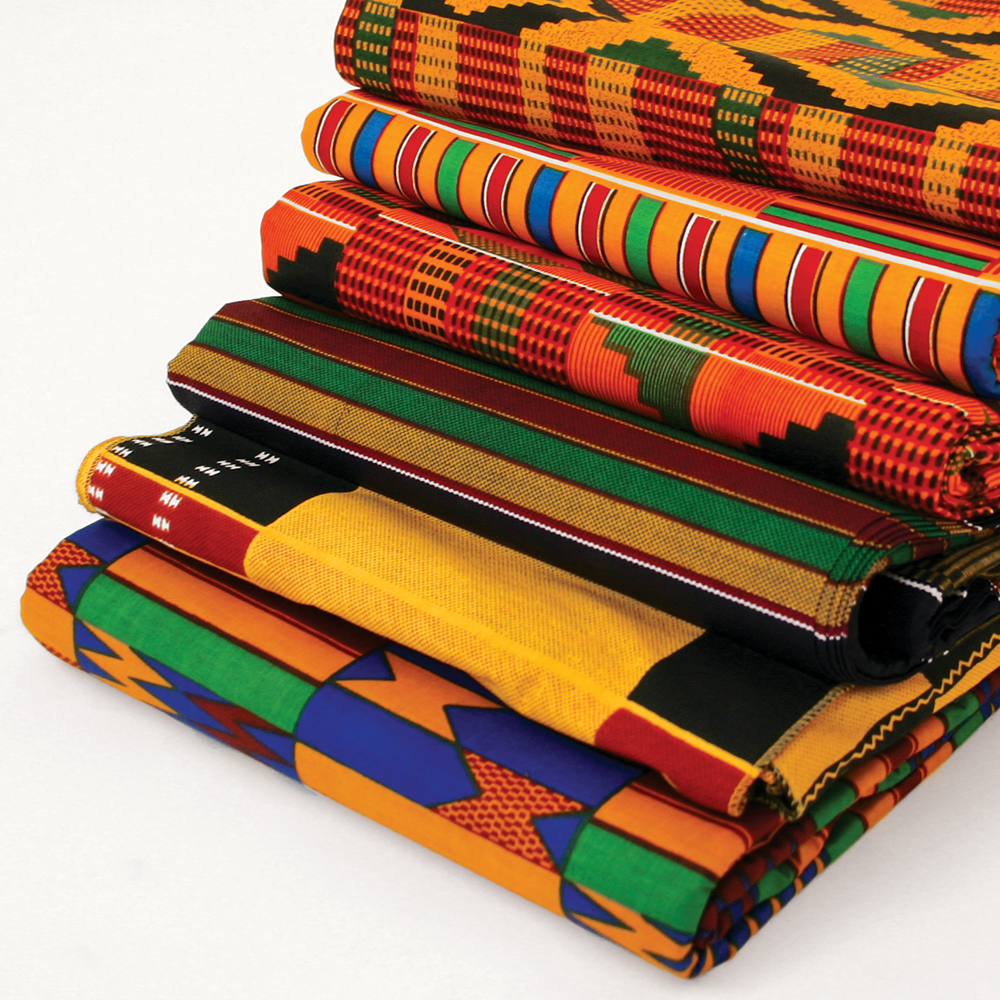
If you search for African cloth Kente, Kente cloth, Kente fabric, Ghanaian Kente or Kente cloth material, you are looking at another important African textile tradition.
But there is another useful distinction:
Kente is woven, not printed.
What Is Kente Cloth?
Kente is a traditional Ghanaian textile made from narrow strips woven together.
UNESCO inscribed the craftsmanship of traditional woven textile Kente on the Representative List of the Intangible Cultural Heritage of Humanity in 2024. UNESCO describes Kente as strips woven from silk, cotton or rayon using horizontal looms.
The tradition is associated with Ghanaian weaving communities, including Asante and Ewe traditions, and the finished textiles can communicate identity, social history and status.
Talk to Us About Kente-infused ProductsWhat Does Kente Cloth Mean?
There is no single universal Kente cloth meaning.
Colours, patterns, names and designs can carry different associations, and finished Kente textiles may be named after proverbs, sayings, social situations, historical ideas, events and community identities.
UNESCO specifically describes Kente as a means of communication and information exchange and as a vehicle for constructing identity and reflecting the social histories of communities.
This is why searching for the meaning of Kente cloth patterns can produce different answers depending on the specific design and cultural tradition being discussed.
Is Kente From Ghana?
Yes. Ghanaian Kente is one of Ghana’s best-known textile traditions.
However, it is important to avoid treating all Kente as one identical tradition. Different Ghanaian communities have their own weaving histories, designs and practices.
Today, Kente is used for ceremonial clothing, weddings, graduation, chieftaincy events, religious occasions, state events, fashion, accessories and contemporary design.
For African Things, Kente is another example of how African textile heritage can be translated into useful modern products.
Kente-inspired or sourced Kente materials can be incorporated into bags, accessories, souvenir products, gifts and other African-inspired designs, giving customers another way to celebrate African culture beyond traditional clothing.
This approach is especially useful for customers looking for African gifts, Ghanaian-inspired gifts, cultural souvenirs, corporate gifts or personalised items with a strong visual connection to African heritage.
African Print vs Ankara: Are They the Same Thing?
Not exactly.
This is one of the most important points to understand.
“Ankara” is commonly used to describe a particular family of printed cotton textiles.
“African print” is much broader.
Someone might say:
“I love African prints.”
They could be talking about Ankara.
But they could also be referring to Adire-inspired fabric, Kente, Aso Oke, Bogolanfini-inspired designs or other African textile traditions.
A better way to think about it is:
African print is a broad description.
Ankara is one important type of African-associated printed textile.
Adire is a Yoruba resist-dyed textile tradition.
Aso Oke is a Yoruba handwoven textile.
Bogolanfini is a Malian mud-dyed textile tradition.
Kente is a Ghanaian woven textile tradition.
That distinction matters because these fabrics do not share the same origins or production methods.
It also matters when buying or ordering products. If someone asks for an Adire bag, for example, they may specifically want the look and heritage associated with Yoruba Adire rather than simply any colourful African print.
At African Things, understanding these distinctions helps make it possible to create or source products that are more closely aligned with what customers actually want.
Ankara vs Adire vs Aso Oke vs Bogolanfini vs Kente
If you are trying to identify an African textile quickly, the production technique can provide a useful starting point.
If the fabric is machine-printed with colourful repeating patterns, it is likely Ankara or another printed fabric.
If it is predominantly indigo and created through tying, stitching, folding or starch resist, it may be Adire.
If it is made from narrow woven strips joined together and is associated with Yoruba textile traditions in southwestern Nigeria, it may be Aso Oke.
If it has earthy mud-dyed patterns associated with Mali and the Bamana, it may be Bogolanfini.
If it is a highly patterned Ghanaian strip-woven textile associated with Asante or Ewe traditions, it may be Kente.
The appearance alone, however, is not always enough to establish provenance. Modern textile manufacturers can reproduce the visual appearance of traditional textiles using industrial printing.
This is why African Things places value on knowing what material or textile influence is actually being used in a product, especially when creating custom or culturally inspired gifts.
Why Does This Difference Matter?
Understanding these differences matters for several reasons.
1. Cultural Accuracy
Calling every African textile “Ankara” can erase the diversity of African textile traditions.
Adire has its own Yoruba history.
Aso Oke has its own Yoruba weaving heritage.
Bogolanfini has its own Malian cultural context.
Kente has its own Ghanaian weaving traditions.
They deserve to be identified correctly.
For African Things, this distinction is more than a technical detail. It is part of respecting the cultures and craftsmanship behind the products we promote and create.
African-inspired products are more meaningful when the material, design or inspiration behind them is understood rather than simply grouped under one broad label.
2. Understanding Craftsmanship
The production process tells us a lot about the textile.
Ankara is primarily printed.
Adire is traditionally resist-dyed.
Aso Oke is woven.
Bogolanfini is handwoven and mud-dyed.
Kente is woven in strips.
Those differences affect texture, appearance, production time and how the material can be incorporated into finished products.
For a business such as African Things, that knowledge is useful when developing custom bags, souvenir products, corporate gifts, accessories and other African-inspired items.
3. Understanding Cultural Meaning
Many African textiles are more than decorative materials.
Patterns, colours, names and production techniques can communicate identity, social status, history, beliefs, relationships or important life events.
UNESCO’s documentation of Kente, for example, specifically describes the textile as a means of communication and identity construction.
The V&A similarly documents Adire patterns whose names and designs are connected with local places, imagery and changing social contexts.
This is one reason African Things believes African-inspired products can be more than attractive merchandise. The fabric itself can add meaning and cultural character to a gift.
African Things and the Value of African-Inspired, Locally Made Products
African textile traditions become even more meaningful when they are translated into products that people can actually use.
This is an important part of what African Things stands for.
Rather than limiting African-inspired design to dresses and traditional clothing, African Things supports the idea that African materials, patterns and craftsmanship can be incorporated into practical, useful and giftable products.
That can include tote bags, backpacks, laptop sleeves, laptop bags, souvenir bags, gift bags, accessories, corporate gifts and other custom products, depending on the material and design.
An Ankara fabric can become an everyday tote bag.
An Adire-inspired design can become a distinctive Nigerian gift.
Aso Oke can be incorporated into a special-occasion accessory or premium-looking cultural gift.
Kente can bring Ghanaian heritage into a contemporary bag or souvenir.
African-inspired mud-cloth designs can create an earthy, artistic look for accessories and décor.
The important point is that the textile does not have to remain a piece of cloth sitting in a wardrobe. African craftsmanship can become part of everyday life.
For customers, this also creates more meaningful choices.
A company looking for corporate gifts can choose an African-inspired product instead of another generic promotional item.
A school or organisation can use culturally inspired bags for an event.
An event planner can explore custom souvenir bags incorporating African prints.
A wedding couple can choose personalised African-inspired gifts for guests.
A business can create branded tote bags or backpacks that combine functionality with a distinctly African visual identity.
And someone simply looking for a gift from Nigeria can choose an item that feels connected to the country’s creative heritage.
That is where African Things sees an opportunity: to make African-inspired products practical, useful, beautiful and relevant to modern customers.
Can African Textiles Be Used for Bags and Souvenirs?
Absolutely.
Different African textiles and textile-inspired designs can be incorporated into tote bags, backpacks, laptop bags, laptop sleeves, pouches, travel bags, gift bags, souvenir bags, fashion accessories and corporate gifts.
The choice of material can completely change the character of the finished product.
An Ankara tote can bring bold colour and pattern to an everyday accessory.
An Adire bag can highlight Nigerian and Yoruba textile heritage.
Aso Oke can add distinctive woven texture and a strong ceremonial or cultural feel.
Kente-inspired designs can bring Ghanaian cultural aesthetics into contemporary products.
Bogolanfini-inspired patterns can create an earthy, geometric appearance.
At African Things, these possibilities are particularly relevant for custom and bulk orders. Businesses, schools, NGOs, event planners, churches, organisations, wedding planners and other groups may want practical products that also reflect an African identity.
The important thing is to identify the material accurately rather than automatically calling every patterned African-inspired bag “Ankara.”
African Textiles in Modern Fashion and Design
One of the most exciting things about African textile traditions is that they continue to evolve.
Ankara has become a major part of contemporary African print fashion, appearing everywhere from Nigerian dresses to international fashion collections.
Adire has moved beyond traditional wrappers into contemporary clothing, accessories, interiors and art.
Aso Oke continues to be important for Yoruba weddings, celebrations and ceremonies while also appearing in contemporary fashion and creative work.
Bogolanfini has moved from traditional Malian contexts into international fashion, interiors and design.
Kente continues to represent Ghanaian heritage while being incorporated into contemporary clothing, accessories and creative industries.
This evolution does not make these textiles less African.
Instead, it demonstrates how textile traditions can remain relevant while adapting to new generations and new forms of creativity.
African Things takes a similar approach by looking beyond traditional clothing and exploring how African-inspired materials can become part of modern bags, gifts, souvenirs, accessories and useful everyday products.
Why African-Inspired Bags Make Meaningful Gifts
A bag is practical.
A textile can make it personal.
Put the two together and you have a gift that can be both useful and culturally meaningful.
That is one reason African-inspired tote bags, backpacks, laptop sleeves and souvenir bags can work well for different occasions.
For corporate gifting, an African-inspired bag can provide a more distinctive alternative to generic promotional merchandise.
For weddings and celebrations, custom souvenir bags can become useful keepsakes rather than items guests simply put away.
For graduations, an African-inspired tote or backpack can be both a practical gift and a reminder of an important milestone.
For schools, NGOs and organisations, custom bags can combine branding with an African visual identity.
For visitors and diaspora customers looking for something connected to Nigeria or Africa, a thoughtfully designed African-inspired product can serve as a practical reminder of home, heritage or a memorable experience.
This is why African Things focuses not only on the fabric but also on what the finished product means to the person receiving or using it.
Common Questions About African Prints
Is every African print Ankara?
No. Ankara is only one category of African-associated textile. Adire, Aso Oke, Bogolanfini and Kente are distinct textile traditions with different origins and production methods.
Is Ankara originally from Africa?
The modern industrial wax-print tradition developed from European attempts to reproduce Indonesian batik. However, the fabric became deeply embedded in African fashion and culture and has been continuously adapted by African consumers, designers and manufacturers.
Is Adire the same as Ankara?
No. Traditional Adire is a Yoruba resist-dyed textile, strongly associated with indigo. Ankara is primarily an industrially printed cotton fabric.
What is Adire fabric made from?
Traditional Adire is generally cotton fabric decorated using resist-dyeing techniques and traditionally associated with indigo dye. Contemporary makers may use different fabrics, dyes and resist materials.
What is Aso Oke?
Aso Oke is a traditional Yoruba handwoven prestige textile from southwestern Nigeria. It is particularly associated with ceremonies and important occasions.
What are the main types of Aso Oke?
Three historically important types are Sanyan, Alaari and Etu. Sanyan is associated with tan wild silk, Alaari with magenta silk and Etu with indigo. Modern Aso Oke includes many additional materials, colours and designs.
What is Kente cloth?
Kente is a Ghanaian woven textile made from strips. Its designs can communicate identity, social history and cultural information. UNESCO recognised its traditional craftsmanship as Intangible Cultural Heritage in 2024.
What is the meaning of Kente cloth patterns?
There is no single meaning that applies to every Kente pattern. Designs, names, colours and associations can vary according to community and context. Many finished textiles are named after proverbs, sayings and social situations.
Is Kente fabric printed?
Traditional Kente is woven rather than printed. The designs are created through the arrangement and manipulation of threads during weaving.
What is Bogolanfini?
Bogolanfini, commonly called Malian mud cloth, is a handmade textile associated particularly with the Bamana of Mali. It is produced using handwoven cotton, plant materials and mud or earth in a resist-dyeing process.
Can African textiles be used for bags?
Absolutely. African textiles can be incorporated into:
- Tote bags and backpacks
- Laptop bags and laptop sleeves
- Pouches and travel bags
- Gift bags and souvenir bags
- Fashion accessories and corporate gifts
African Things is particularly interested in this intersection between African textile heritage and practical product design. The idea is to help customers enjoy African-inspired products that are not only visually appealing but also useful in everyday life.
From African Textiles to African Things
The story of African textiles is not only about what happened in the past.
It is also about what can be created today.
Ankara, Adire, Aso Oke, Kente and Bogolanfini each represent different textile histories, communities and techniques. Bringing their influences into modern products allows those stories to continue appearing in new forms.
For African Things, this means supporting the idea that African-inspired design should be part of everyday products, not restricted to special occasions.
A tote bag can carry a piece of African-inspired design into someone’s daily routine.
A backpack can combine practicality with cultural expression.
A laptop sleeve can turn an ordinary work accessory into something distinctive.
A souvenir bag can become a useful reminder of an event or experience.
A corporate gift can communicate a company’s connection to African creativity.
A personalised gift can become more memorable because of the material, pattern or story behind it.
Where possible, African Things supports the use of locally made, locally sourced and handmade African-inspired products and materials, while recognising that different products may involve different production methods and sources.
The goal is simple: celebrate African creativity while creating products people can actually use.
The Bigger Picture: Africa Has Many Textile Stories
The next time you see a colourful African fabric, don’t immediately call it Ankara.
Ask:
Was it printed, dyed or woven?
Where did the tradition come from?
Which people or community is associated with it?
What techniques were used to create the design?
Does the pattern have a documented cultural meaning?
Those questions reveal a much richer story.
Ankara is an important part of modern African fashion, but it is only one part of a much larger textile landscape.
From Yoruba Adire to Aso Oke, from Malian Bogolanfini to Ghanaian Kente, African textile traditions demonstrate extraordinary creativity, technical knowledge and cultural expression.
And this diversity is exactly what makes African-inspired product design so exciting.
At African Things, the inspiration goes beyond one fabric. Ankara, Adire, Aso Oke, Kente and other African textile traditions can all contribute to a broader vision of useful, beautiful and culturally inspired products.
Whether it is a tote bag, backpack, laptop sleeve, souvenir bag, corporate gift, fashion accessory or another custom product, the material can help tell a story.
And that is perhaps the most important thing to remember:
African print is not one fabric. It is a broad world of textile traditions, histories and contemporary expressions. Ankara is one part of that story—not the whole story.
At African Things, we believe those stories are worth carrying forward—sometimes quite literally, in the form of a bag, gift or everyday product inspired by the rich textile traditions of Africa.
Looking for African-inspired bags, souvenirs, corporate gifts or custom products? African Things can help you explore practical products incorporating African-inspired designs and materials for personal use, events, gifting and bulk orders.
Contact Us Now for Personalized or Bulk Gift Orders
Related posts

You’ve seen it. That bright, beautiful, and incredibly comfortable-looking garment that commands attention in any...

Are you looking to infuse your living space with warmth, culture, and a touch of...

When you’re running a business, your staff is your greatest asset. One simple but powerful...
INTRODUCTION Sustainable fashion is the practice of creating clothing and accessories in a way that...

Whether you look forward to creating an atmosphere for your traditional wedding that gives that...
Add comment
You must be logged in to post a comment.